By UDMV Media
Table of Contents
- What Is Music Copyright?
- Why Copyright Matters
- What Parts of a Song Are Protected?
- The Two Different Copyrights Every Song Has
- Who Owns the Copyright?
- Copyright vs Publishing
- Copyright vs Trademark
- How Copyright Is Created
- Should You Register Your Copyright?
- How to Copyright Your Music
- Common Copyright Myths
- What Happens If Someone Steals Your Song?
- Copyright Best Practices
- Frequently Asked Questions
- Final Thoughts
What Is Music Copyright?
If you're serious about making music, understanding copyright is just as important as knowing how to record a song.
Every day, independent artists upload music to Spotify, Apple Music, YouTube, and TikTok without fully understanding who owns their music—or how they get paid.
Music copyright is the legal protection that gives creators ownership over their original work.
That protection gives you the exclusive right to:
- Reproduce your music
- Sell or distribute it
- License it
- Perform it publicly
- Create remixes or derivative works
- Earn royalties whenever it's used
Without copyright protection, anyone could legally copy your music, upload it elsewhere, or profit from your work.
Fortunately, that's not how copyright law works.
Why Copyright Matters
Imagine spending months writing an album.
You pay for studio time.
You hire a producer.
You shoot a music video.
The song starts gaining traction online.
Then another artist uploads your song under their own name.
Without proper documentation and registration, proving ownership becomes much more difficult.
Copyright protects your investment.
It also protects your future income.
What Parts of a Song Are Protected?
Many artists think there's only one copyright.
There are actually two.
1. The Musical Composition
This includes:
- Lyrics
- Melody
- Chord progression
- Songwriting
This belongs to the songwriter and publisher.
2. The Sound Recording (Master)
This is the actual recording people hear on Spotify or Apple Music.
Usually owned by:
- Independent artist
- Record label
- Producer (depending on agreements)
Every song released commercially has both copyrights.
Understanding the Two Copyrights
Imagine Drake records a song.
The songwriting belongs to the writers.
The master belongs to whoever financed and owns the recording.
These rights generate different royalty streams.
| Musical Composition | Sound Recording |
|---|---|
| Lyrics | Finished recording |
| Melody | Master recording |
| Songwriters | Artist/Label |
| Publishing royalties | Master royalties |
Understanding this difference is one of the biggest advantages independent artists can have.
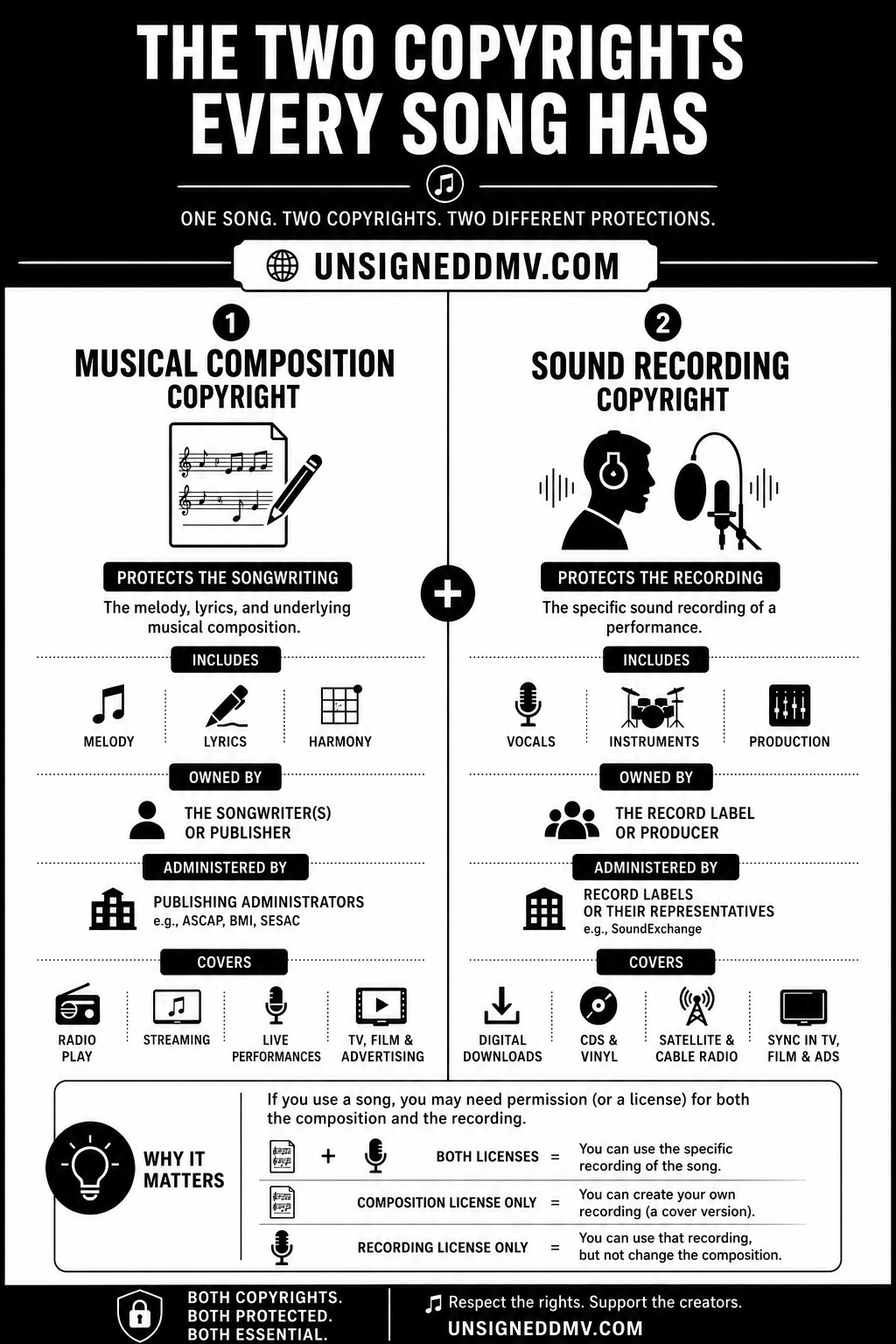
Figure 1. Every commercially released song contains two separate copyrights: the musical composition and the sound recording (master). Understanding both is essential for protecting ownership and collecting royalties.
Who Owns the Copyright?
Ownership depends on who created the work and what agreements were signed.
If You Wrote the Song Alone
You own:
- Songwriting
- Composition
If you also recorded and financed it,
You usually own:
- The master recording
If You Worked With Other Writers
Ownership is divided.
Example:
Artist A — 50%
Producer — 25%
Songwriter — 25%
This is why split sheets are so important.
If You Signed to a Label
Ownership depends entirely on your contract.
Some labels own:
- Masters
- Publishing
- Licensing rights
Others allow artists to retain ownership.
Always read contracts carefully.
Copyright vs Publishing
These terms are often confused.
They're not the same thing.
Copyright
Legal ownership of creative work.
Publishing
The administration and monetization of songwriting rights.
Publishing helps collect:
- Performance royalties
- Mechanical royalties
- International royalties
Think of copyright as ownership.
Think of publishing as getting paid.
Copyright vs Trademark
Another common misunderstanding.
Copyright Protects
- Songs
- Beats
- Lyrics
- Albums
- Music videos
Trademark Protects
- Artist names
- Logos
- Brand names
- Merchandise
Example:
A rapper may copyright every album they release.
They may trademark their artist name separately.
Do I Automatically Own Copyright?
Yes.
The moment you create an original song and record it in a tangible form,
Copyright exists automatically.
Examples include:
- Recording on your phone
- GarageBand session
- Pro Tools session
- Written lyrics
- Voice memo
Registration is not required to own copyright.
However...
Registration provides much stronger legal protection.
Why Register Your Copyright?
Registration gives you benefits that automatic copyright alone does not.
Including:
✔ Public ownership record
✔ Stronger evidence in court
✔ Ability to pursue statutory damages (where applicable)
✔ Easier enforcement against infringement
✔ Greater leverage in licensing negotiations
Think of registration as insurance for your music career.
How to Copyright Your Music
Here's a simple process every independent artist should follow.
Step 1
Finish your song.
Step 2
Save:
- WAV files
- Lyrics
- Project files
- Session files
Step 3
Agree on songwriting splits.
Get them in writing.
Step 4
Register the composition and/or sound recording with the appropriate copyright office in your country if you want the additional legal benefits of registration.
Step 5
Register your songs with:
- Your Performing Rights Organization (PRO)
- Your publishing administrator (if you use one)
Step 6
Keep organized records of:
- Split sheets
- Producer agreements
- Session dates
- Contracts
- Metadata
- ISRC codes
- UPC codes
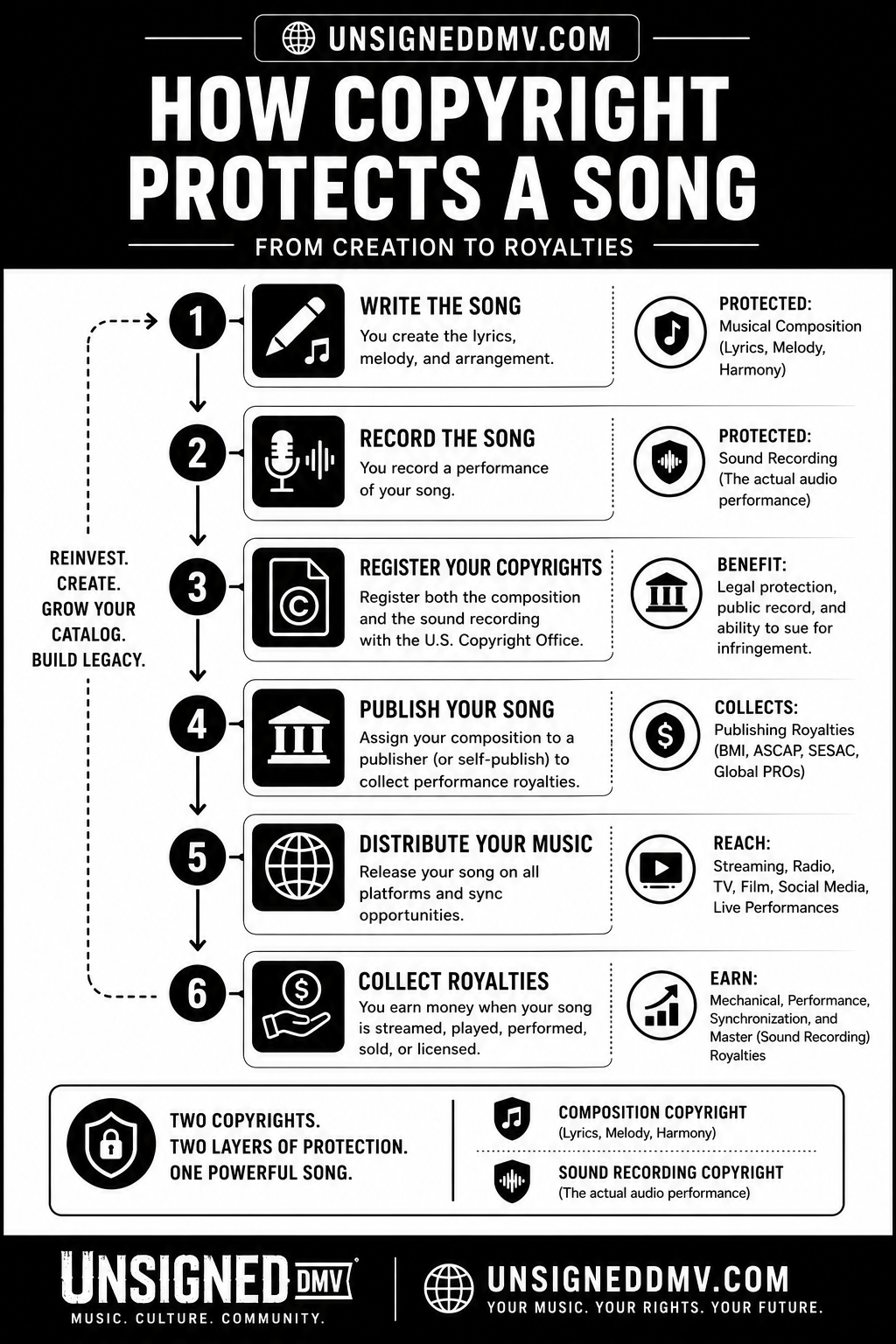
Figure 2. This flowchart illustrates the lifecycle of a song, from creation and copyright protection to publishing, distribution, streaming, and royalty collection. Following these steps helps independent artists protect their ownership and maximize revenue opportunities.
Common Copyright Mistakes
Waiting until a song goes viral
Protect your work before success.
Never using split sheets
Friendships don't replace paperwork.
Assuming the producer owns nothing
Ownership depends on the agreement.
Ignoring metadata
Missing information can delay or reduce royalty payments.
Using uncleared samples
Sampling another recording without proper permission can expose you to legal and financial risk.
Thinking YouTube upload equals copyright
Uploading music online does not replace formal registration if you later need to enforce your rights in court.
What Happens If Someone Steals Your Song?
If someone:
- Uploads your music
- Copies your lyrics
- Releases your beat
- Monetizes your recording
You may be able to:
- Contact the platform and submit an infringement report
- Request removal of the content
- Seek licensing or settlement discussions
- Consult an attorney about enforcement options, especially if your work is registered
Documentation is your strongest asset.
Keep every project file.
Keep every agreement.
Keep every receipt.
Copyright Checklist
Before releasing any song, ask yourself:
- □ Do I own the master?
- □ Are the songwriting splits agreed upon?
- □ Did everyone sign a split sheet?
- □ Do I have producer agreements?
- □ Have I organized my metadata?
- □ Do I have ISRC and UPC codes?
- □ Have I registered with my PRO?
- □ Have I considered registering my copyright?
- □ Have I cleared every sample?
- □ Do I have backup copies of every session?
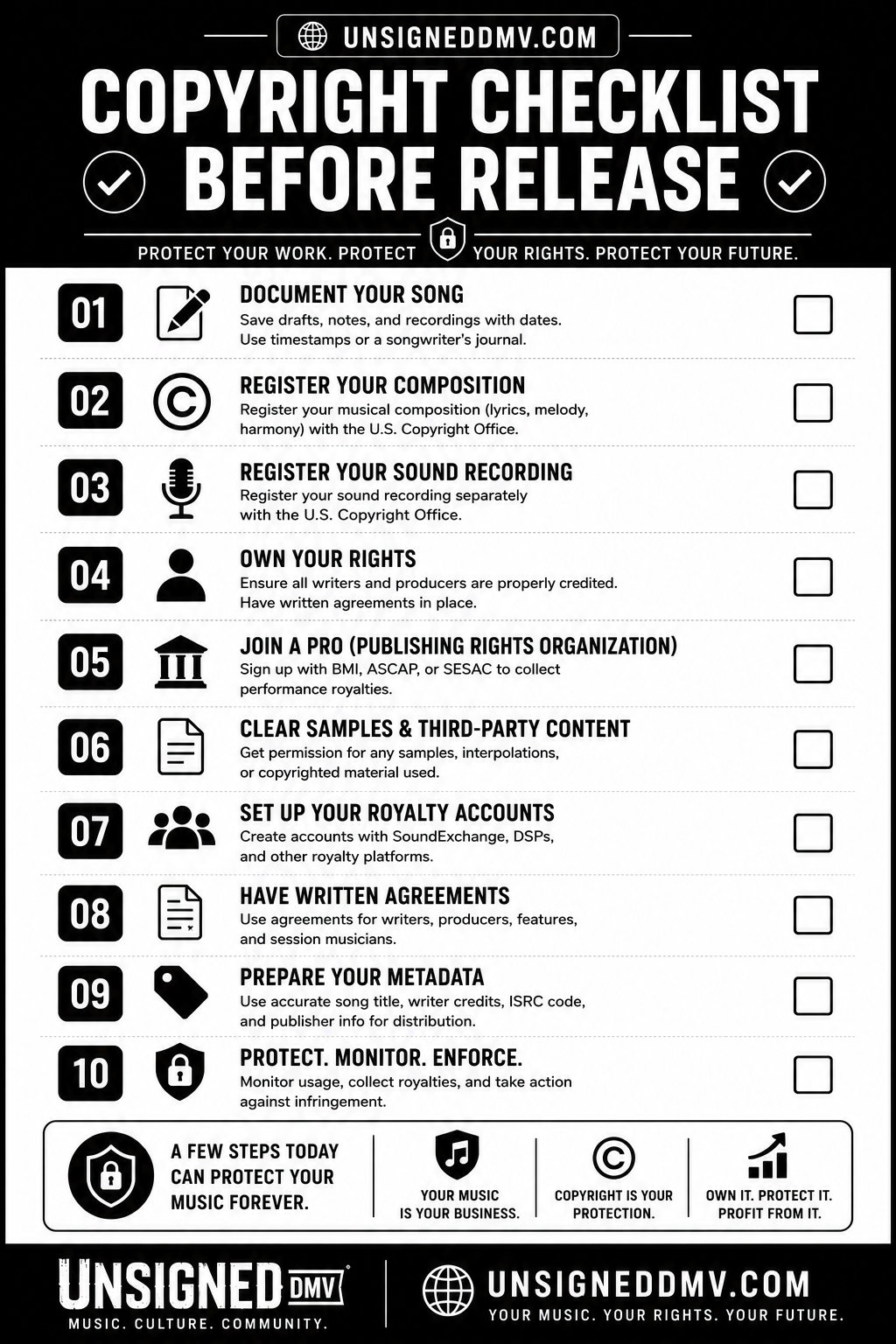
Figure 3. Download the Copyright Checklist Before Release, a free printable resource that helps independent artists verify ownership, organize legal documents, prepare metadata, and complete essential release tasks before publishing new music.
Frequently Asked Questions
Do I own my song automatically?
Yes. Copyright generally exists automatically when your original work is fixed in a tangible form, though registration offers additional legal benefits.
Should independent artists register copyrights?
Many artists choose to register because it strengthens their ability to enforce their rights and provides important legal advantages.
Can two people own the same song?
Yes. Co-writers and collaborators can share ownership based on agreed percentages.
Does posting on Instagram protect my music?
No. Posting publicly does not replace copyright registration or other documentation of ownership.
Can I copyright a beat?
Yes. Original beats and instrumental compositions are protected by copyright.
What if I bought a beat online?
Read the license. Many beats are leased rather than sold exclusively, and the terms determine what rights you receive.
Final Thoughts
Understanding music copyright is one of the smartest investments an independent artist can make. Great songs create opportunities, but ownership protects those opportunities.
Whether you're releasing your first single or building a long-term catalog, keep clear records, use written agreements with collaborators, register your songs where appropriate, and learn the difference between composition rights, master rights, publishing, and licensing. Building these habits early helps protect your creative work and positions you to collect the royalties you've earned.